The whole Earth, lit from end to end
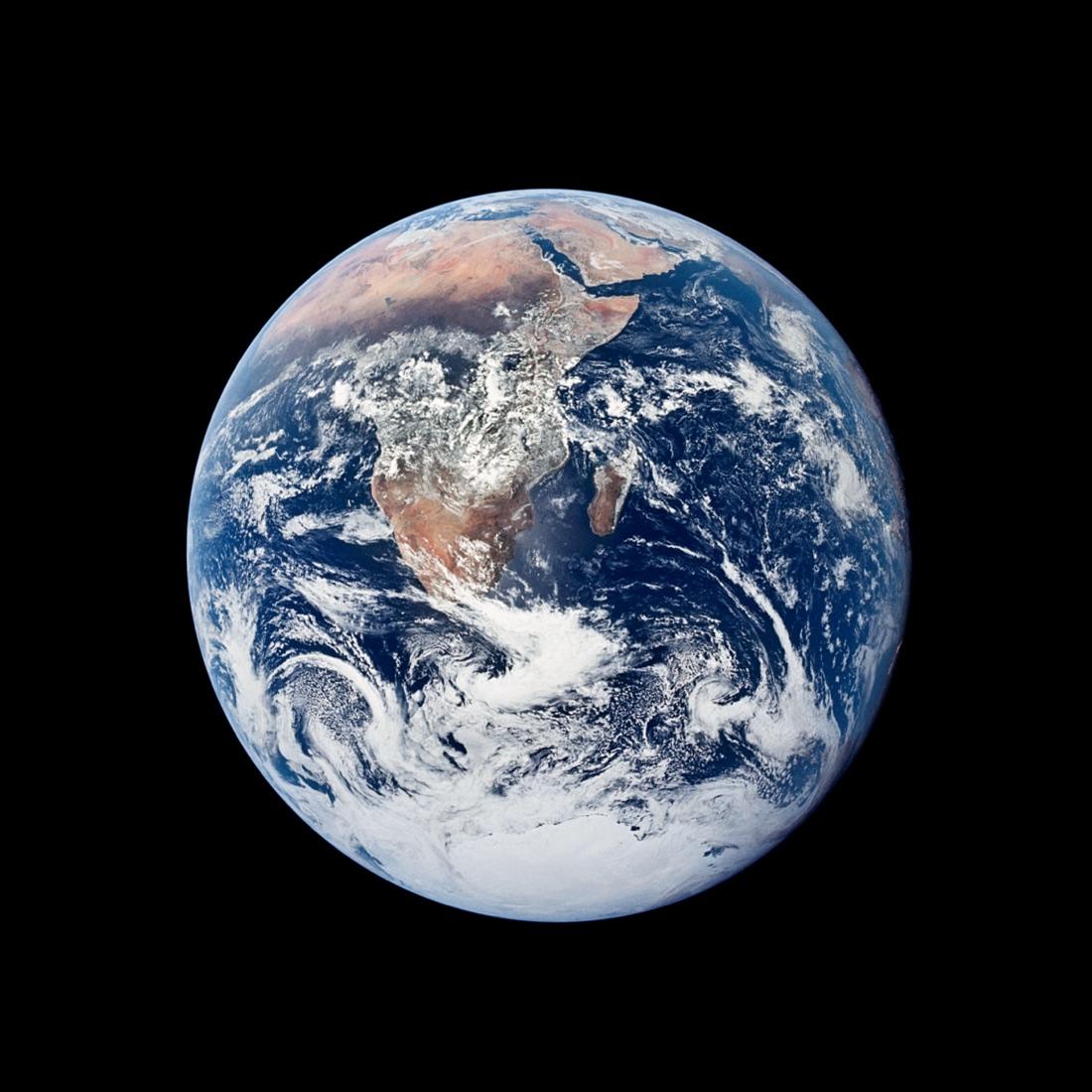
Apollo 17 left on a night launch in the early hours of 7 December 1972, bound for the Moon. About five hours later, some 29,400 kilometres out, the crew looked back at a fully lit Earth.
On earlier missions the alignment of the Earth, Moon and Sun had not allowed a picture like this; the Smithsonian's National Air and Space Museum says Apollo 17 was the only lunar mission with the chance. It was also the first time an Apollo path made it possible to photograph the south polar ice cap. "Hey, there's Antarctica," said Ron Evans. "It's all full of snow."
The crew took a series of pictures with a Hasselblad and an 80 mm lens, and the third, frame 22727, became the one the world knows. NASA credits it to the crew. Who pressed the shutter is still argued over: the Air and Space Museum names Harrison Schmitt, while the Apollo Flight Journal points to Evans.
NASA calls it one of the most widely known photographs of Earth, and it has been called the most reproduced photograph ever. Two years after the first Earth Day, the environmental movement took it up as a symbol. Gene Cernan gave the crew's own summary: "We'd like to confirm, from the crew of America, that the world is round."
About the work
- Made by
- The Apollo 17 crew: Eugene Cernan, Ronald Evans and Harrison Schmitt
- Date
- 1972
- Technique
- Colour photograph, taken with a Hasselblad and an 80 mm lens
- Collection
- NASA (AS17-148-22727)
Sources
- The Blue Marble from Apollo 17 NASA Scientific Visualization Studio
- The Blue Marble (lighting) NASA Scientific Visualization Studio
- Apollo 17 Blue Marble NASA
- Apollo 17 Flight Journal: launch Apollo Flight Journal
- Apollo 17 Flight Journal: the Blue Marble Apollo Flight Journal
- Picturing Earth Smithsonian National Air and Space Museum
- Eugene A. Cernan NASA
- Ronald E. Evans (biography) NASA
- Harrison H. Schmitt (biography) NASA
Next story
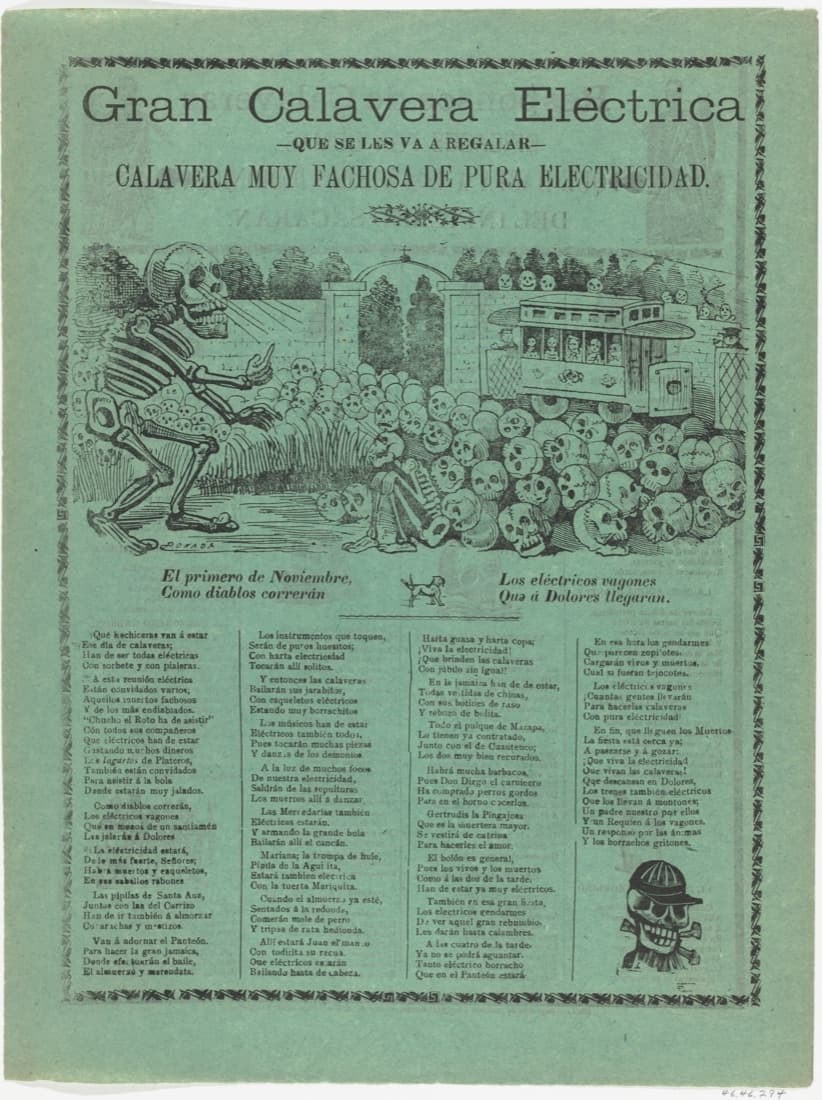 BroadsideDeath takes the electric tramPosada's Gran Calavera Eléctrica mocked Mexico City's new electric trams for the Day of the Dead. Broadsides like it sold for a centavo.1900Read the story