The little book that opened the sky
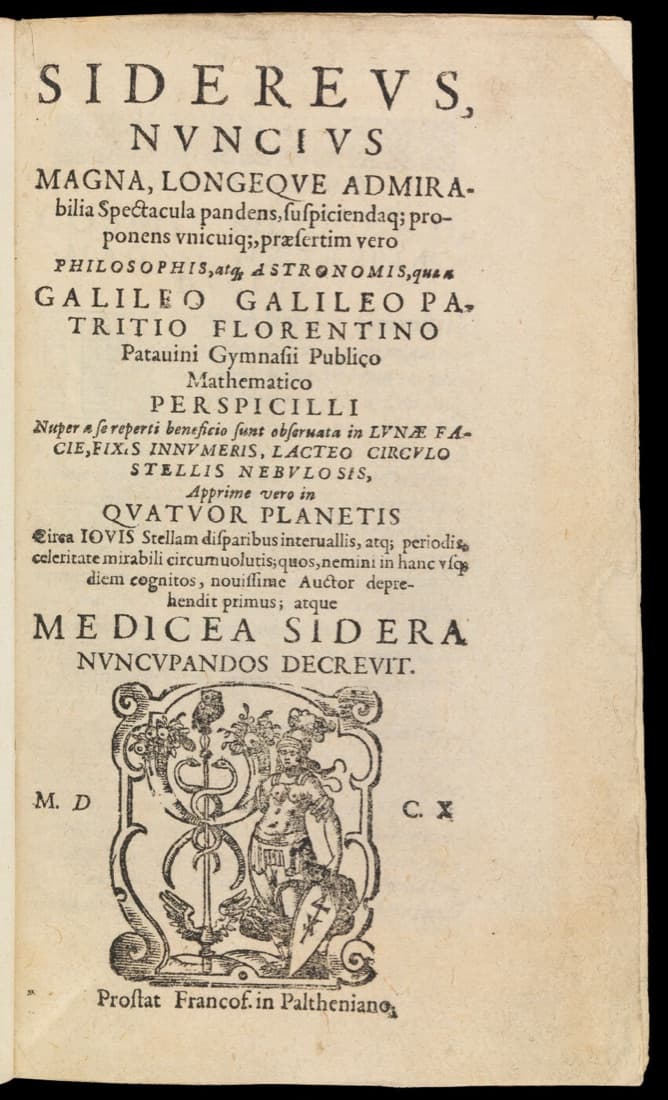
In January 1610 Galileo Galilei, professor of mathematics at Padua, pointed his telescope at Jupiter. From 7 to 15 January he watched four small points of light move around the planet.
In March 1610 he published what he had seen, in Venice, in a short book called Sidereus Nuncius, usually translated as The Starry Messenger. The Moon's surface was rough, with mountains and valleys. The Milky Way was "nothing else than a congeries of innumerable stars". And Jupiter had four moons, which he named the Medicean Stars in honour of his patron, Cosimo II de' Medici.
The first edition, 550 copies printed in Venice under the name of Tommaso Baglioni, sold out shortly after it appeared. That same year Zacharias Palthenius printed a second, unauthorised edition in Frankfurt, in a cheaper, smaller format. The title page shown here comes from it: "Prostat Francof. in Paltheniano", on sale in Frankfurt at Palthenius's.
The book opened the way for Galileo's return to Tuscany: Cosimo II appointed him his mathematician and philosopher.
About the work
- Made by
- Galileo Galilei (1564–1642)
- Date
- 1610
- Technique
- Printed book; title page of the small-format edition printed in Frankfurt
- Collection
- Wellcome Collection, London
Sources
- Sidereus nuncius Wellcome Collection
- Three bright Galilean stars: three copies of Sidereus Nuncius in Kansas City Linda Hall Library
- Scientist of the day: Galileo Galilei Linda Hall Library
- Stars in his eyes Library of Congress, Inside Adams blog
- Sidereus Nuncius (facsimile) Museo Galileo, Florence
- Galileo Galilei (biography) Museo Galileo, Florence
Next story
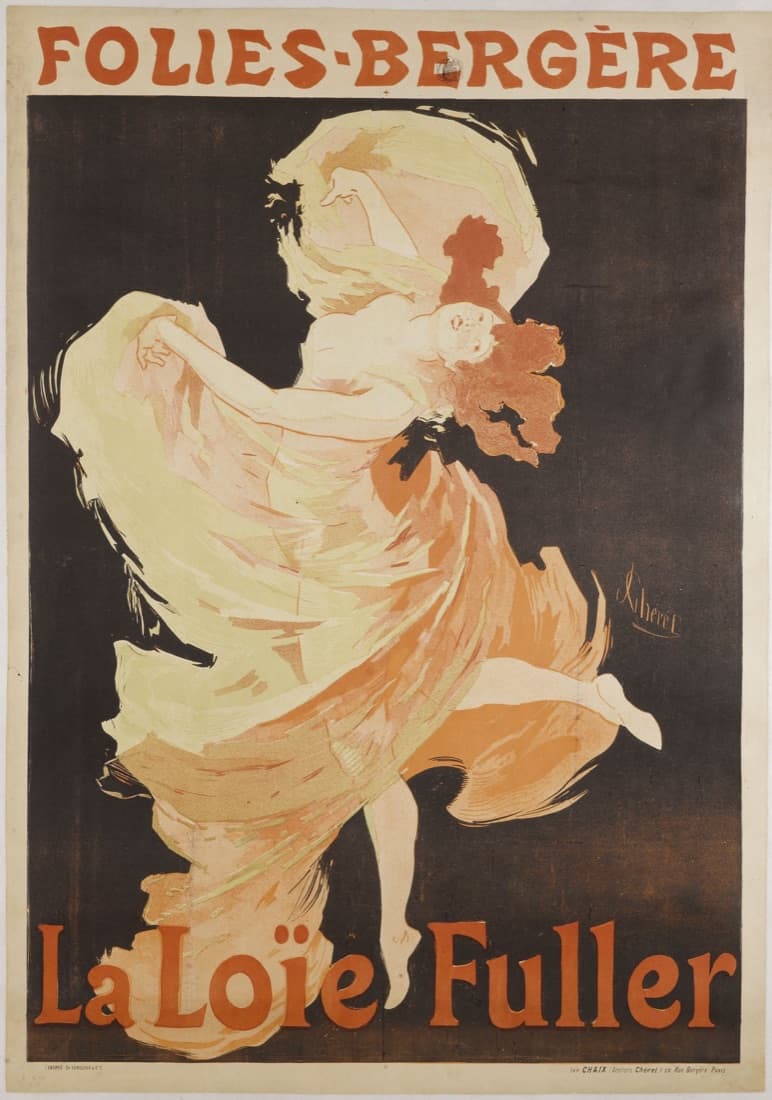 PosterA poster for a dance made of lightJules Chéret's 1893 poster of Loïe Fuller, the American dancer who swirled silk under coloured electric light at the Folies-Bergère.1893Read the story