A poster for a dance made of light
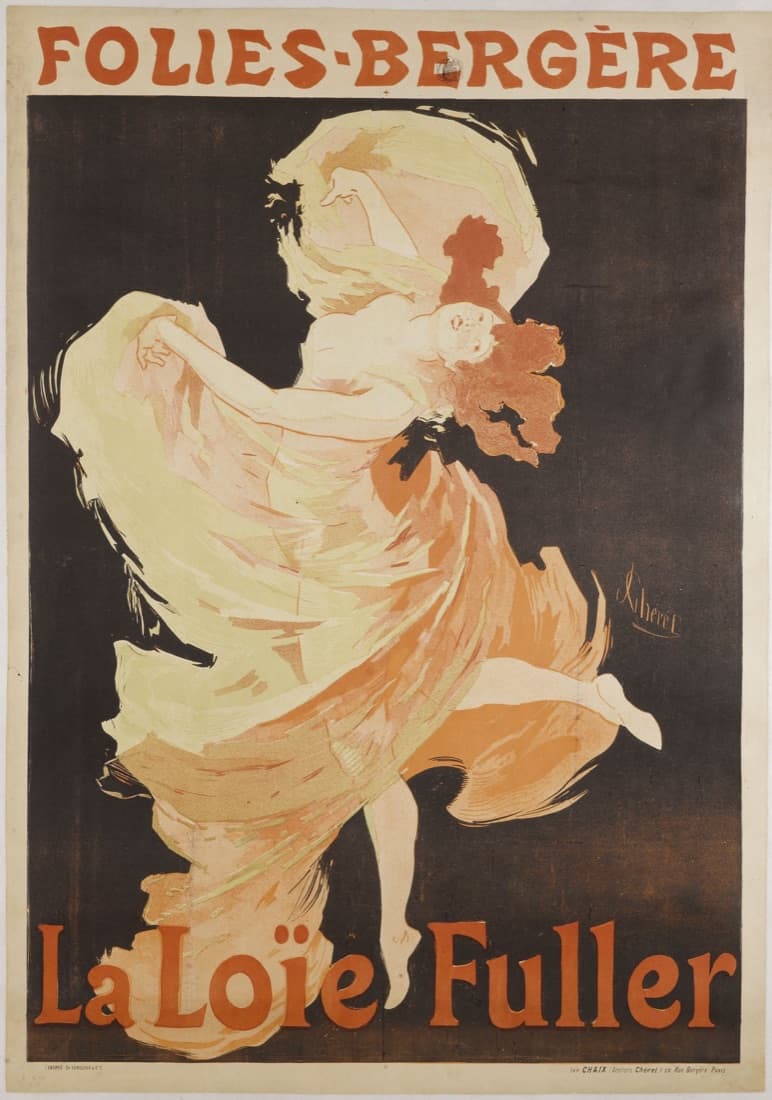
Loïe Fuller was born in Illinois in 1862, moved to Paris in 1892 and quickly became a star at the Folies-Bergère. She danced in billowing silk, swinging it with rods sewn into her sleeves, under rotating coloured spotlights, and she patented lighting equipment, coloured gel filters and stage control systems of her own.
She chose Jules Chéret, known as the father of the poster, to design her poster for the Folies-Bergère. Chéret had founded his own lithographic press in 1866 and always drew directly on the stone, even after he handed the everyday printing over to the firm of Chaix in 1881.
This poster dates from 1893. It was printed in four different colour combinations, probably, the V&A suggests, to give an impression of her four dances. Here she spins against a black ground, the silk shading from pale yellow to orange.
Chéret designed more than 1,000 posters in the first twenty years of his press. The V&A says that with his work posters began to be seen as an art form, and that he led other artists, such as Toulouse-Lautrec, to try the medium.
About the work
- Made by
- Jules Chéret (1836–1932)
- Date
- 1893
- Technique
- Colour lithograph, printed by Imprimerie Chaix, Paris
- Collection
- Paris Musées, Musée Carnavalet (AFF1121)
Sources
- Folies-Bergère, La Loïe Fuller Paris Musées, Musée Carnavalet
- Folies-Bergère, La Loïe Fuller Victoria and Albert Museum
- Folies-Bergère, La Loïe Victoria and Albert Museum
- Saxoléine, pétrole de sûreté Victoria and Albert Museum
- Poster by Jules Chéret Victoria and Albert Museum
- Loie Fuller papers New York Public Library
- Loie Fuller University of Washington, Department of Dance
- Rhonda K. Garelick, Loïe Fuller and the Serpentine The Public Domain Review
Next story
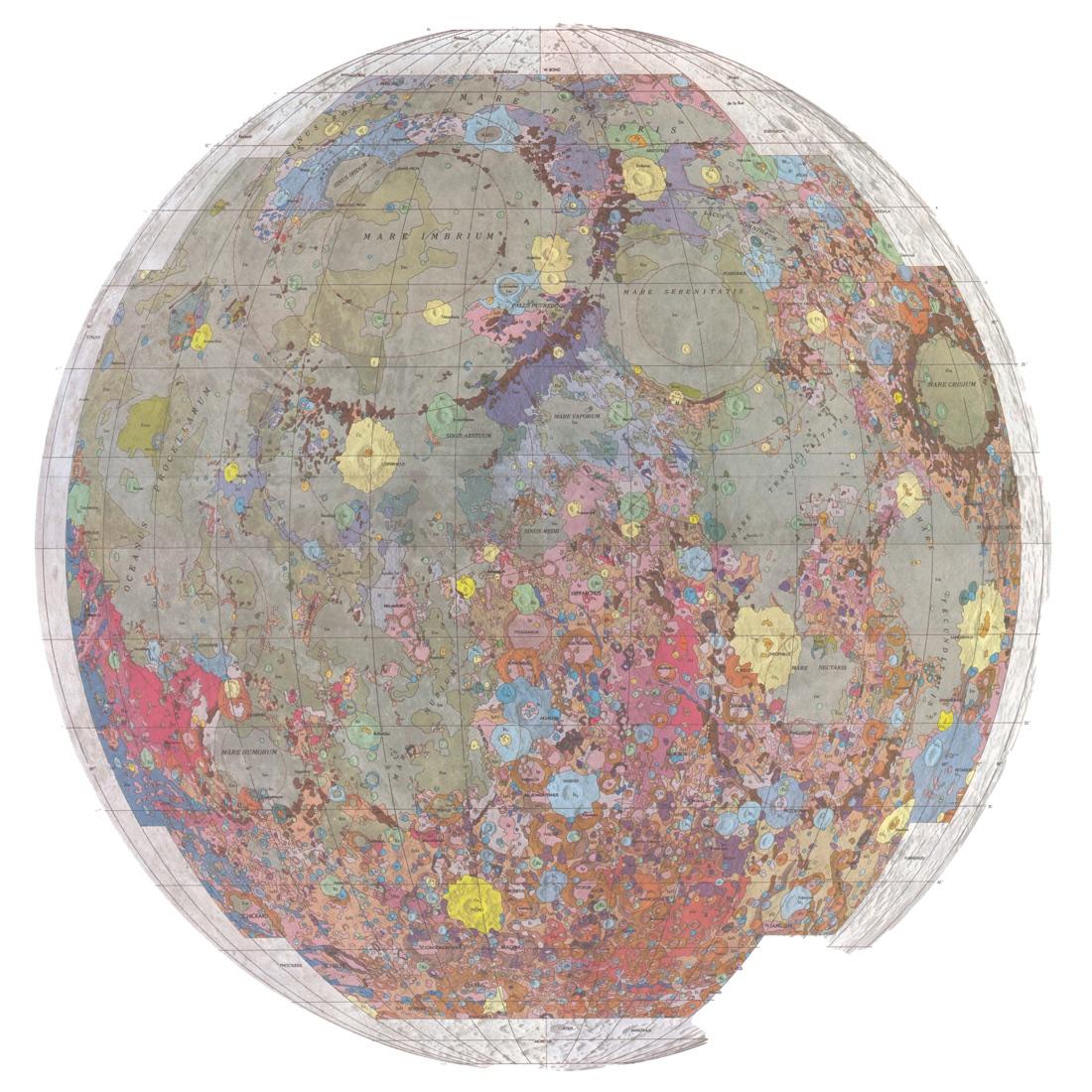 MapReading the Moon's history in its faceThe 1971 USGS geologic map of the Moon's near side sorted its plains, craters and mountains by age, drawn from Lunar Orbiter photographs.1971Read the story