The day the Earth rose
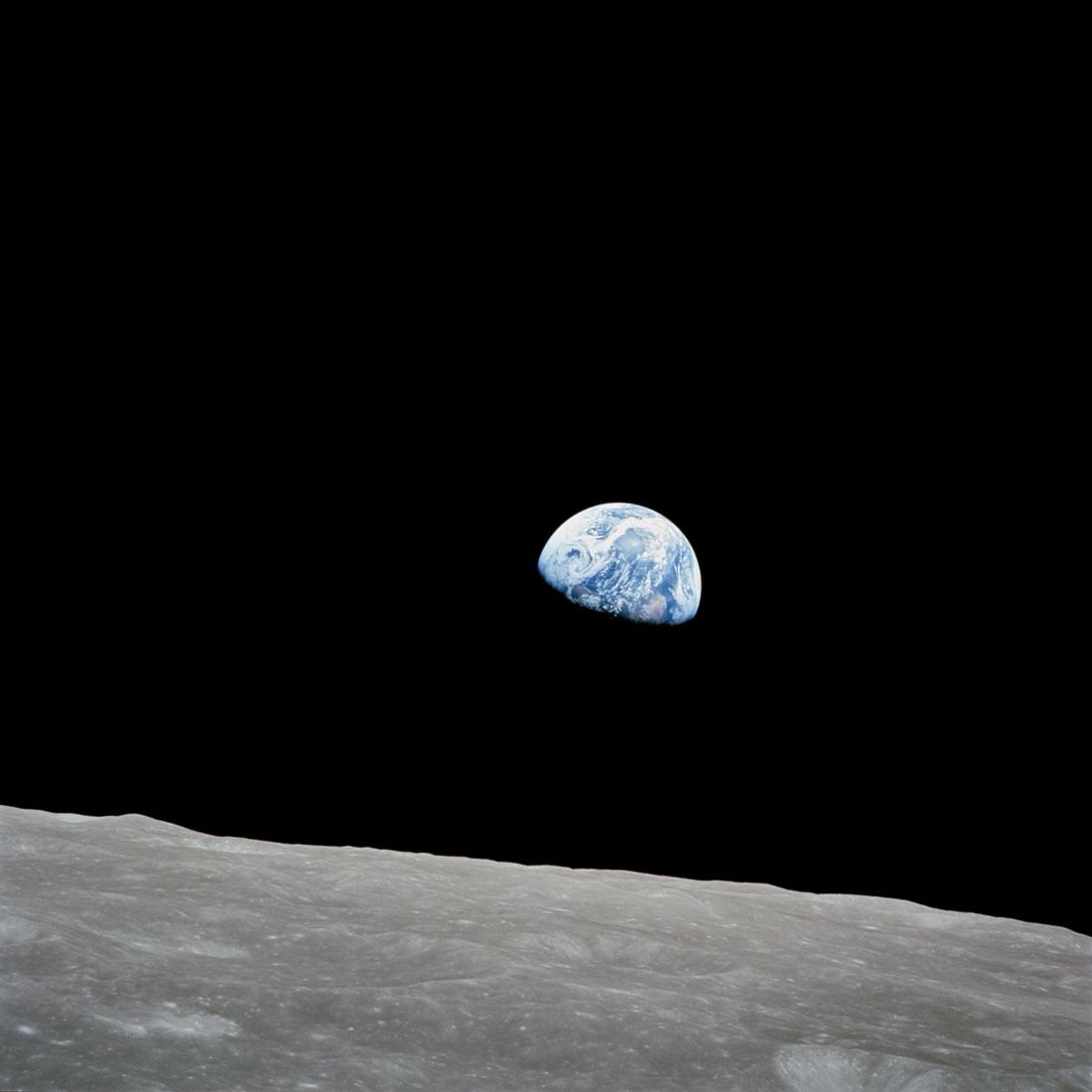
Apollo 8 was the first human flight beyond Earth orbit. On 24 December 1968 Frank Borman, Jim Lovell and Bill Anders were coming around from the far side of the Moon for the fourth time, still turning the spacecraft, when the Earth appeared over the lunar horizon.
"Oh my God, look at that picture over there!" Anders called. "There's the Earth comin' up." Borman joked that it was not scheduled. Anders asked for a roll of colour film, Lovell found it, and Anders took one black-and-white frame and then two in colour, with a Hasselblad and a 250 mm lens. This is the first of the colour frames.
They were not the first pictures of the Earth from near the Moon: a robotic Lunar Orbiter had sent one in 1966. They were the first taken by a person, and they showed the Earth rising like a moon over a grey world. On 5 May 1969 this one appeared on a US postage stamp.
NASA pages describe it as having inspired Earth Day and the environmental movement. Anders, born in Hong Kong in 1933, later became the first chairman of the US Nuclear Regulatory Commission and ambassador to Norway. He put the flight in one line: "We came all this way to explore the Moon, and the most important thing is that we discovered the Earth."
About the work
- Made by
- William Anders (1933–2024), Apollo 8
- Date
- 1968
- Technique
- Colour transparency film, taken with a Hasselblad and a 250 mm lens
- Collection
- NASA (AS08-14-2383)
Sources
- The story behind Apollo 8's famous Earthrise photo NASA
- Apollo 8's iconic Earthrise NASA
- Earthrise (visualization and transcript) NASA Scientific Visualization Studio
- Apollo 8 Flight Journal: day 4, orbit 4 Apollo Flight Journal
- A bold step: Apollo 8 sends first human flight beyond Earth NASA Kennedy Space Center
- First view of Earth from the Moon (1966) NASA
- Picturing Earth Smithsonian National Air and Space Museum
- William A. Anders (biography) NASA
- NASA Administrator remembers Apollo astronaut William Anders NASA
Next story
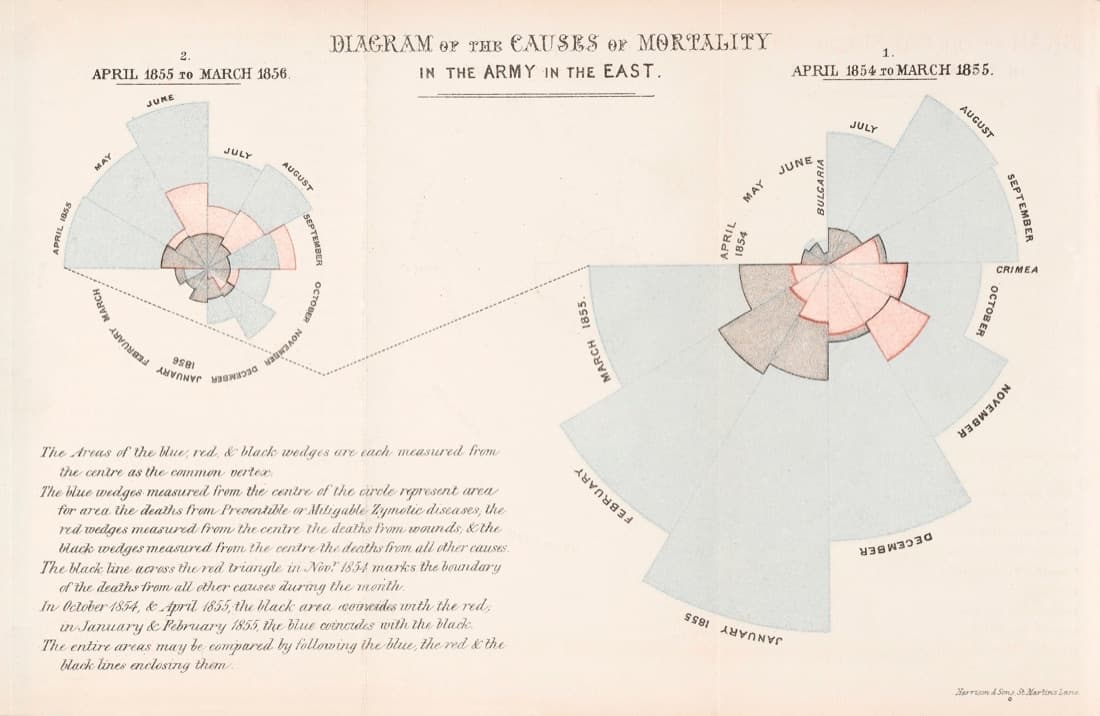 DiagramWhat really killed the soldiersFlorence Nightingale's 1858 diagram showed that in the Crimean War far more British soldiers died of preventable disease than of their wounds.1858Read the story